
A Complete Guide for Future Drivers
Choosing a career in commercial trucking starts with understanding the training and licensing required to operate a heavy vehicle safely. Whether you are entering the transportation industry for the first time, changing careers or looking to develop professional driving skills, selecting the right training program is an important decision.
Certified truck driving training in Ontario is a search many aspiring drivers use when looking for structured instruction, practical driving experience and guidance through the commercial licensing process. However, before enrolling, it is essential to understand what certification means, which licence class suits your goals and what Ontario requires from commercial driver applicants.
At Hero Truck Driving School in Brampton, aspiring drivers can explore Class A MELT and Class D DZ training options. Understanding the differences between these pathways can help you choose a program that matches the vehicles you want to operate and the type of driving career you wish to pursue.
This guide explains the training process, provincial requirements, essential driving skills and factors to consider when comparing commercial driving schools in Ontario.
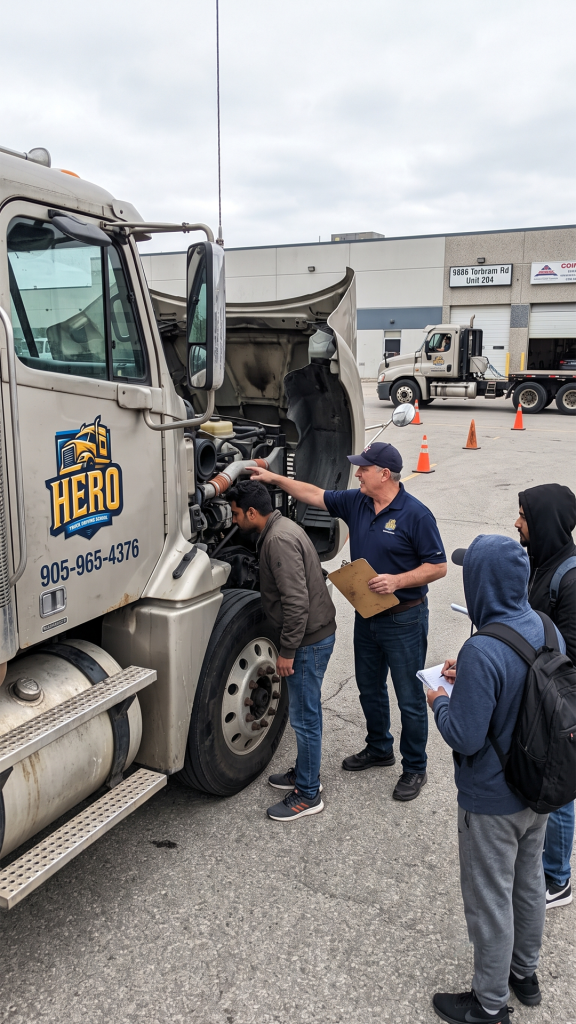
What Is Certified Truck Driving Training in Ontario?
Certified truck driving training generally refers to structured instruction designed to help students develop the knowledge and practical skills required for commercial driving. Depending on the program, this may include classroom learning, vehicle inspections, manoeuvring exercises, supervised road practice and preparation for applicable licensing tests.
However, the word certified can mean different things in the commercial driving industry. Completing a training course does not automatically mean that a student holds a commercial driver’s licence or is authorized to operate every type of truck.
In Ontario, specific requirements apply to different licence classes. Applicants pursuing a full Class A licence who are subject to Mandatory Entry-Level Training (MELT) must complete the required training through an approved provider before taking their road test.
When comparing schools, ask whether the particular program is authorized to deliver the training you need and what document or qualification you receive after completion.
Understanding AZ and DZ Truck Driver Training
Before choosing a course, identify the type of commercial vehicle you want to operate. Ontario’s Class A and Class D licences cover different vehicle configurations, so the appropriate training pathway depends on your intended work.
Class A MELT training for tractor-trailer driving
Class A training is generally suitable for people who want to pursue tractor-trailer driving and other work requiring full Class A privileges.
Ontario requires applicants subject to MELT to complete at least 103.5 hours of mandatory entry-level training before taking the full Class A road test.
Training covers the knowledge and practical skills needed to operate large trucks safely. Depending on the curriculum, students learn about vehicle inspections, backing, coupling and uncoupling, safe driving procedures, vehicle systems and on-road operation.
An AZ licence, which includes the applicable air brake privileges, can allow drivers to operate qualifying tractor-trailer combinations and other vehicles covered by the licence.
This pathway may suit people interested in freight transportation, regional trucking, long-haul driving or other commercial positions requiring full Class A privileges.
Before enrolling, confirm the school’s current authorization to provide the required Class A MELT program and ask what the course includes.
Class D DZ training for heavy trucks
Class D training may suit people interested in operating qualifying heavy straight trucks and certain truck-and-trailer combinations.
Depending on the vehicle and employer, relevant work may include delivery operations, construction-related transportation, dump truck driving and commercial fleet activities.
The exact vehicles permitted depend on their weight, configuration and applicable licence restrictions. A Class D licence does not provide the same privileges as a full Class A licence.
It is also important to understand that Ontario’s mandatory 103.5-hour MELT requirement is associated with eligible full Class A applicants. Do not assume that every DZ applicant must complete the Class A MELT program.
If your goal is to operate a straight truck rather than a tractor-trailer, ask about the specific Class D training and testing requirements before making your decision.
AZ vs. DZ: Which training should you choose?
Your choice should be based on your intended vehicle, employment interests and long-term plans.
Consider Class A MELT if you want to pursue tractor-trailer driving. Consider Class D DZ training if your intended work involves vehicles covered by Class D privileges.
Neither qualification guarantees a job. Employers may have additional requirements involving experience, driving records, insurance eligibility, endorsements and job-specific training.
Why professional training matters
Commercial vehicles are larger, heavier and more complex to operate than ordinary passenger vehicles. Drivers must understand vehicle dimensions, stopping distances, blind spots, road positioning and the consequences of unsafe decisions.
Professional instruction can help you develop:
- Vehicle control and safe manoeuvring techniques.
- Knowledge of commercial driving regulations.
- Pre-trip inspection and defect-identification skills.
- Defensive driving and hazard awareness.
- Safe turning, reversing and lane-positioning techniques.
- Familiarity with the applicable licensing test.
The goal is not simply to pass a test. It is to build safe driving habits that you can continue using throughout your professional career.
Ontario Commercial Driver's Licence Requirements
Understanding the licensing process before enrolling can help you plan your training and avoid unexpected delays.
According to the Government of Ontario, applicants for full Class A and Class D licences must generally meet the following requirements:
- Be at least 18 years old.
- Hold a valid Ontario driver’s licence other than a G1, G2, M1 or M2, or an accepted equivalent.
- Meet the applicable vision standards.
- Submit a satisfactory medical report.
- Pass the required commercial vehicle knowledge test.
- Complete mandatory training when required for the licence being pursued.
- Pass the appropriate commercial vehicle road test.
Additional conditions apply depending on the licence class, vehicle used for testing and any required endorsements.
Air brake endorsement requirements
Many commercial vehicles use air brake systems. In Ontario, drivers generally need a Z endorsement to operate vehicles with air brakes or air-over-hydraulic brake systems, where applicable.
The required course, knowledge test or practical assessment depends on the driver’s circumstances and the applicable provincial rules.
Before paying for a training package, confirm whether air brake instruction and testing preparation are included or charged separately.
For official information, review the Government of Ontario’s Get a Truck Driver’s Licence guide.
What Will You Learn During Commercial Truck Driver Training?
A structured program should help students develop both technical knowledge and practical driving competence. The exact curriculum depends on the selected course and provincial requirements.
1. Vehicle inspection and safety checks
Commercial drivers must understand how to inspect their vehicles before operating them. Training can cover inspection procedures, essential vehicle components, defect recognition and the appropriate response to safety concerns.
These skills matter because identifying a potential problem before a trip can help prevent unsafe vehicle operation.
2. Vehicle control and manoeuvring
Students need supervised practice to understand how a heavy vehicle responds to steering, braking and changes in speed.
Practical exercises may include reversing, turning, positioning and manoeuvring in restricted spaces. Class A students also need to learn the relevant tractor-trailer handling procedures.
3. Road driving and defensive techniques
On-road instruction helps learners apply their knowledge in real traffic conditions.
Important skills include maintaining safe following distances, managing speed, checking blind spots, changing lanes carefully, approaching intersections and responding to hazards.
Commercial drivers must continually assess traffic conditions and make decisions that protect themselves and other road users.
4. Commercial driving regulations
Training should also help students understand applicable traffic laws, commercial vehicle responsibilities and relevant safety procedures.
Depending on the vehicle and work involved, drivers may need additional knowledge relating to load security, trip documentation, hours-of-service rules or other regulatory obligations.
Understanding which requirements apply to your intended work is an important part of preparing for a commercial driving career
How to Choose the Right Truck Driving School in Ontario
Comparing schools carefully can help you make a better-informed decision about your training investment.
Verify the program’s approval status
If you need Class A MELT, confirm that the provider is approved to deliver the required training. Ontario specifies the qualifications and regulatory obligations that apply to Class A training providers.
Do not rely on advertising language alone. Ask the school to explain which program you will enrol in and how it meets the requirements for your intended licence.
Compare practical instruction
Ask how practical lessons are organized, what manoeuvres are covered and how instructors assess your progress.
You should understand the balance between classroom instruction, yard exercises and on-road driving. For Class A MELT, also confirm that the required training standard is met.
Understand the complete cost
Training costs can vary depending on the course, included instruction and additional services.
Request a written breakdown covering tuition, applicable fees, air brake instruction, road test preparation, extra lessons and any retesting costs that may apply.
Avoid choosing a school based only on its advertised price. Compare the services and instruction included in the total package.
Ask about schedules and student support
Find out when training sessions are available, how practical lessons are scheduled and what happens if you need additional instruction.
Clear communication about course requirements and scheduling can make it easier to plan your training around work and other responsibilities.
Let's Start our Driving Lessons now!

Phone Number
905-965-4376
Why Consider Hero Truck Driving School in Brampton?
Hero Truck Driving School offers Class A MELT and Class D DZ training options for people exploring commercial driving education in Brampton.
The school highlights practical instruction, experienced instructors and a focus on road safety. These are relevant factors to discuss when deciding where to complete your training.
Before registering, speak with the team about your intended licence class, eligibility, current course schedule, training structure and fees. For Class A MELT, confirm the school’s current approval status and the program’s compliance with Ontario requirements.
You can visit the school’s Class A MELT training page to explore the tractor-trailer training pathway or review its Class D DZ driver training information.
Choosing a program with a clear structure and suitable practical instruction can help you approach the licensing process with a better understanding of what is expected.
Start Your Commercial Driving Journey with the Right Training
Choosing commercial driver training is an important step toward understanding the responsibilities of operating a heavy vehicle. By learning about licensing requirements, comparing training programs and asking the right questions, you can make a more informed decision about your next steps.
Hero Truck Driving School can help you explore its AZ MELT and DZ training options in Brampton and understand which pathway may suit your goals.
Contact Hero Truck Driving School today at 905-965-4376 or email herotruckdrivingschool@gmail.com to discuss your training options and take the next step toward your commercial driving goals.
Frequently Asked Questions
It generally refers to structured commercial driving instruction designed to develop the knowledge and practical skills needed for licensing. The exact requirements depend on the licence class. Students should verify the provider’s approval status whenever an approved program is required.
No. Ontario’s mandatory 103.5-hour MELT requirement applies to applicants who must complete training for a full Class A licence. Applicants pursuing Class D licensing should confirm the separate requirements applicable to their circumstances.
The duration varies by licence class, course schedule and individual progress. Full Class A applicants subject to MELT must complete the prescribed training hours. Ask the school for its current schedule rather than relying on a general estimate.
Yes, provided you meet the applicable eligibility requirements. Class A training is relevant to qualifying tractor-trailer combinations, while Class D training covers qualifying heavy trucks and certain combinations. Your intended vehicle and employment goals should guide your decision.
No. Training and licensing can help you qualify for relevant positions, but employment depends on the employer’s requirements, experience, driving record and other factors. Ask schools to explain any employment support they genuinely offer.
Check the applicable Ontario government requirements and ask the school for details of its authorization to deliver your specific program. For Class A MELT, use the province’s official information about mandatory training and approved providers.
Hero Truck Driving School is located at 9886 Torbram Road, Unit 204, Brampton, Ontario. Contact the school to discuss available Class A MELT and Class D DZ options, current fees and eligibility.

You Have Any Question?
We’re here to assist you! Feel free to reach out to us through any of the following methods:

Phone Number
905-965-4376

Email Address
herotruckdrivingschool@gmail.com

Address
9886 Torbram Rd Unit 204 Brampton, ON L6S 3L9, Canada

Websites
www.awesomesite.com
Get In Touch
Fill out the form below and we’ll respond promptly to assist with your inquiries.